
What You Can Build on Your Property in NZ (Using the District Plan)
If you’ve ever tried to check what you can build on your property, chances are someone has told you to “look at the District Plan”.
That’s good advice in theory. In practice, opening a District Plan for the first time can feel a bit like falling into a rabbit hole.
The Challenge?
The District Plan is detailed and technical - often hundreds of pages long.
The good news is you don’t need to read all of it – you just need to know what to read to get an understanding of what might be possible on your site.
What Is a District Plan? (and Why It Matters)
If you’re planning to build, subdivide, or develop land in New Zealand, the District Plan is important.
District Plans are created by local councils and set the rules for:
- What you can build
- Where you can build
- How land can be subdivided
- When resource consent is required
Every property in New Zealand is subject to these rules.
To check what you can build on your property, you need to check
✔ Zoning
✔ Overlays
✔ Built form rules (height, setbacks, coverage)
✔ Subdivision controls
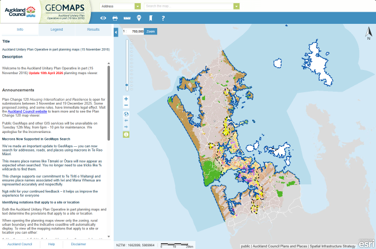
Identify your zoning and overlay using the council GIS map
1. Check the online GIS maps. This may be called:
- ePlan
- Property Search
- GeoMap
- District Plan Viewer

2. Use the map to search for your property
3. This will provide the zoning
4. Then identify overlays and site features. This could include catchment and hydrology, underground services, contours, heritage areas, landscape or coastal protection features and more.
Check the District Plan Rules
After identifying zoning and overlays, the next step is to open the District Plan and review the relevant rules.
You’re typically looking for:
- Maximum building height
- Boundary setbacks
- Site coverage limits
- Minimum lot sizes for subdivision
What Determines Whether You Need Resource Consent?
In most cases:
- If your proposal meets all rules → it is permitted
- If you breach a rule → you will likely need resource consent
Even small breaches (like height or setback) can trigger consent requirements.
Why Two Properties Can Have Different Outcomes
It’s common for neighbouring properties to have completely different development potential.
This usually comes down to:
• Different zoning
• Different overlays
• Site-specific constraints
This is why a quick check is useful - but a full assessment is often needed for certainty.
Explore Step-by-Step Guides for Your Region
We’ve put together a series of guides providing step-by-step processes to access and interpret the online GIS Maps and District Plans for a number of different regions.
These will help you understand what might be possible on your property and where to start.
- Learn how to use the Auckland Unitary Plan and GeoMaps
- Learn how to use the Selwyn and Waimakariri District Plans
- Learn how to use Christchurch District Plan
- Learn how to use the Te Tai o Poutini Plan (West Coast South Island)
When to Get Professional Advice
If you’re:
- Considering subdivision
- Buying land for development
- Unsure about zoning or overlays
- Wanting to avoid costly mistakes
Speaking with a planner early can save significant time and risk.
Need Help Understanding Your Property?
At Inovo, we help property owners, developers, and investors:
- Assess development potential
- Navigate District Plans
- Manage resource consent
- Deliver projects from feasibility through to completion
If you want clarity on what’s possible for your site, feel free to get in touch.
Was this article helpful? Here’s some other topics that might be of interest to you:
National Policy Statement for Natural Hazards (2025): What developers and landowners need to know
What’s the difference between as resource consent and a building consent?
Disclaimer
This article contains general information and opinion based on our expertise. It is provided free of charge and does not constitute legal or other professional advice. The information within it was up to date at the time of publishing.
Have you got further questions about this topic or our other services?
We are always happy to help – drop us an email rmplanning@inovo.nz, or phone us on 020 4000 0294.
.png)